July 01, 2012

Shipley and Saltaire

The hotel I stayed in was lovely and friendly. The bedroom and bathroom made me jealous given the size of the one we have in the flat. The bed was so big that when I woke up in the morning, only half the bed was mussed up.


© Glaciations of the World
Across the road, making up my view, was a mountain range and St Paul's Church.

© Glaciations of the World

© Glaciations of the World
There are some brilliant gravestones in the yard. Greenwood Bentley 1777 - 1858 and Knapton Bradley 1824-1872. I did some research on Knapton and in the 1861 census he appears as 'Neptune'. 

© Glaciations of the World

© Glaciations of the World
Inside St Paul's Church, Shipley. A lady let me in as she was about to do some photo copying of the Parish Maagazine. They have a very vibrant community and it seems they are concerned with supporting the community more so than preaching hell fire and damnation. Very positive given what has been in the media a lot lately.

© Glaciations of the World
There are also some very sad grave stones that list half a dozen or more still born, or short lived children. It seems that the Salt Mill I was headed for was partly responsible for the high infant death rate. 200 chimneys belched out black sulphurous smoke and frequent outbreaks of cholera and typhoid meant only 30% of children born to the textile workers lived to 15 years. The average life expectancy was a shockingly low 18 years.

© Glaciations of the World

© Glaciations of the World
View down to the Mill

© Glaciations of the World
Saltaire United Reformed Church - Completed in 1859 the church is an example of Italianate religious architecture and is now a Grade 1 listed building. Sir Titus Salt is interred in the mausoleum. See www.saltaireurc.co.uk for more info.

© Glaciations of the World

© Glaciations of the World
View from the loo in the Mill

© Glaciations of the World
Salts Mill, home now to 1853 and David Hockney Galleries, the Saltaire Exhibition and shopping area. See www.saltsmill.org.uk
When Salts Mill opened in 1853 it was the biggest factory in the world. 3000 workers at 1200 looms produced 30,000 yards of cloth a day.
Saltaire, the area I headed into next, takes its name from its founder, Titus Salt and the River Aire, which runs through the village. Salt moved his business and employees from the overcrowded and polluted city of Bradford in an attempt to look after them.


Work on the area began in 1851 and continued until 1876. The Mill was the first building to be completed in 1853.


"The housing provided was of the highest quality. Each had a water supply, gas lighting, an outdoor privy, separate living room and cooking spaces and several bedrooms. This compared favourably with the typical workers cottage.


Salt was also one of the greatest Victorian philanthropists. He donated liberally to good causes locally and nationally. Almshouses were provided rent-free for the elderly and sick in Saltaire. They came with a pension, forty years before the first state pension in the United Kingdom.


By the 1980s the British textile industry was in steep decline...Salts Mill was finally closed in 1986. To the rescue came another brilliant entrepreneur, Jonathan Silver, who bought the Mill and within months opened a gallery exhibiting the work of Bradford-born artist David Hockney...


Saltaire was inscribed on the UNESCO World Heritage List in 2001. It was recognised for its international influence on town planning and as one of the earliest, largest and best preserved nineteenth century 'model villages' anywhere in the world." (Discover Saltaire: UNESCO World Heritage Site: www.visitsaltaire.com).


"Sir Titus Salt died on 29 December 1876, aged 73. The family were not to be allowed a quiet ceremony, however, and the event organised by the Corporation on 5 January 1877, was perhaps the greatest civic event of Victorian Bradford. The hearse proceeded from Crows Nest to the Town Hall. From here a huge procession went forward to Lister Park, headed by the Police, the West Yorkshire Rifle and Artillery Volunteers and representatives from local institutions, followed by merchants, manufacturers and shopkeepers. It is estimated that between 100,000 and 120,000 lined the route. In Saltaire the mill was closed, the streets draped in black and thronged with employees. Senior employees stood on the avenue to the church, to witness the final journey. Sir Titus salt was buried in the mausoleum and so great was the demand to pay respects, that special trains from Bradford were provided" (Saltaire Trail - as above).


© Glaciations of the World

© Glaciations of the World
Site of the Wash and Bath house. Opened 6 July 1863. Built for the comfort and health of residents. There were 48 'coppers' and a drying room. In addition there were 12 male and 12 female baths and a turkish bath. It cost £7000 to build but wasn't a success, with most people preferring their own homes.

© Glaciations of the World

© Glaciations of the World

© Glaciations of the World


© Glaciations of the World
"In 1861 Timothy Binns, a woolcomber lived at 13 Shirley Street (above) with eleven children. By 1871, three children had left home, but one married and remained at home with her husband and child, so the house still held twelve. Eight of these were employed, giving a respectable total income of almost £5 a week. Timothy Binns was an important figure in the village and a trustee of the Methodist Sunday School" (Discover Saltaire: UNESCO World Heritage Site: www.visitsaltaire.com).

© Glaciations of the World

June 22, 2012

Too much time?

You know that moment where you realise you have too much time on your hands? I'm there.


The number one song on my birthday. I also have a suspicion I danced to this when I was many years younger.


This was the number one somewhere when my Dad was born.


For my Mum; (I hate to say it, but this song really is shit, so how it got to number one, I don't know)


For my Sister;


For my Brother in Law;


and my Niece,


***

And even though its Sesame Street, this is cute and kids should know this song.


I love Elmo!


For Sarah. Remember that New Year's party where we were so drunk we got footage of you doing this dance?


I like to move it move it


Remember how we all thought these were an ugly brother, his ugly sister and a non-gender specific little person;


I think I liked the melting Barbies best;


Wannabe;


June 15, 2012

York - Day 2

(This post relates to March, hence some of the timing conventions will seem strange).


It rained a little overnight. This didn't stop the various groups of people cruising past the the pubs and restaurants around the area I stayed. I didn't hang around long in the morning. I made sure I had everything packed and headed around to the Castle Museum I had stumbled across yesterday.


I paid the £9 entry fee and started exploring. I liked that the museum had a clearly directed traffic flow in place. Made it easier and in some regards, safer. The first few rooms are set up in representations of various rooms, commonly found in Yorkshire (and probably the UK). These range from a moorlands cottage to a 17th C. dinning room. Very old fashioned museological style but still nicely presented.


© Glaciations of the World
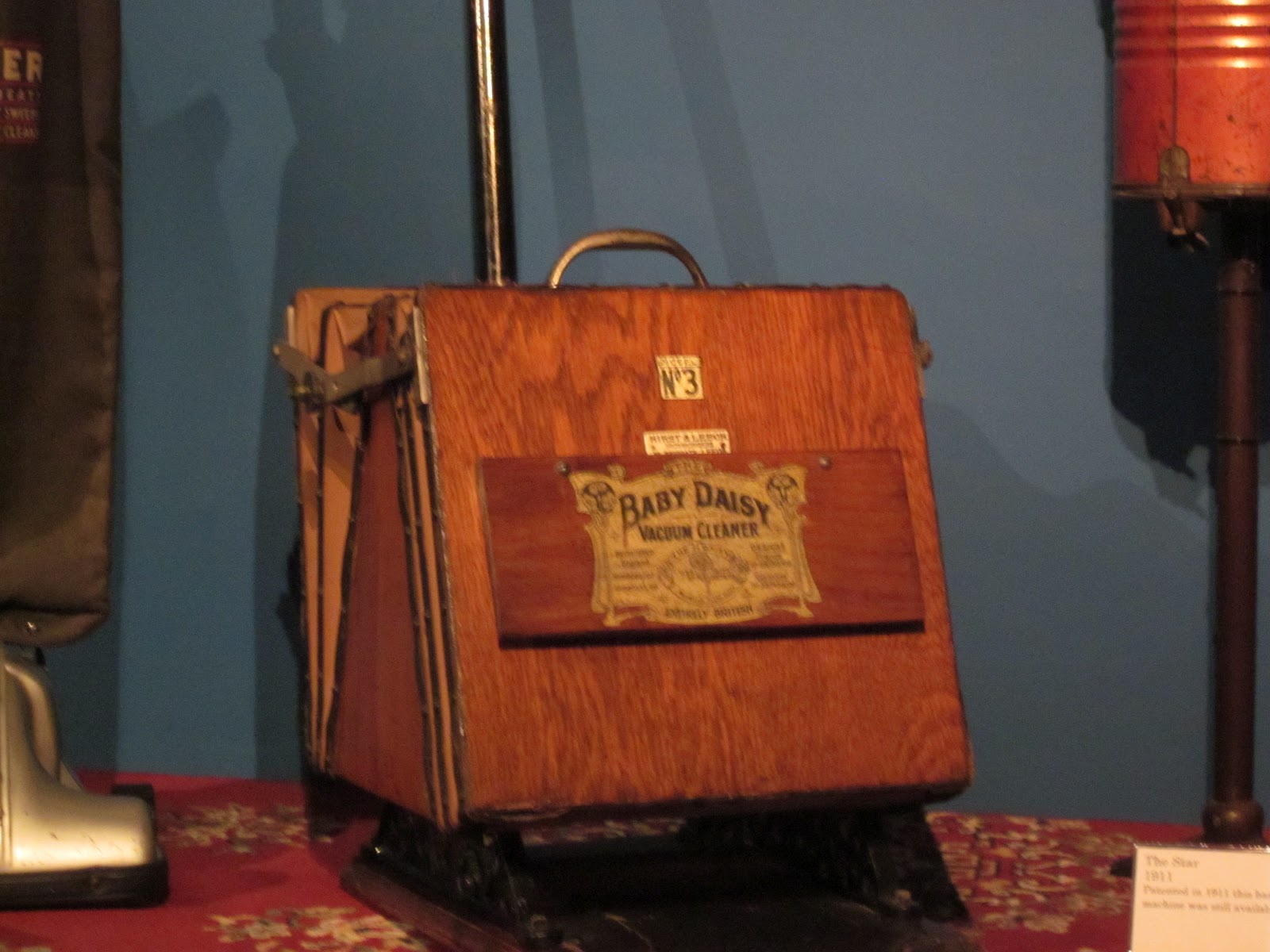
The next section I didn't care for  as it seems out of place for the rest of the museum. Plus you can see vacuums and other cleaners, toilet paper etc. anywhere.


© Glaciations of the World
The farming section was interesting, and I know Grandad would have loved it. Pat the Giant stood out but then re really is only living up to his name.


© Glaciations of the World
My favourite part was Kirkgate St, where the museum is attempting to re-create a Victorian street. It will be amazing once they get it all done. I quite like that while I was there, they were working on an undertakers.


© Glaciations of the World


© Glaciations of the World
I came back out into the still grey day and decided to head straight for the Jorvik Centre. As I followed the signs, I came across Fairfax House. Fairfax House boasts it is the finest Georgian town house in England. Parting with another £6 I entered one of the most beautiful houses I've ever been to.


Image Source
The house was originally the winter home of the Viscount Fairfax. Its interior was designed by Yorks most distinguished architect, John Carr. In the 20th C. the house was adapted as a cinema and dance hall, with one of the ceilings being painted blood red.


This room was the dance hall and the ceiling has now been cleaned of the red, which was a similar colour to the walls.Image Source 
In the renovated bedrooms there are four chairs, collected by Noel Terry, whose collection fits out the entire house. These four chairs have had their seats covered with 17th C. tapestries that were discovered, stored in an attic, of an elderly lady. The needle work is amazingly detailed.


The house itself, when in the hands of the Viscount, was intended as the dowry for his only living daughter, Anne. Anne, however, never married.


The Viscount died in 1772 and the house passed through the hands of private owners, became a gentlemen's club in the 19th C. and then offices. It was requisitioned for military use in WWI and was transformed into the entertainments mentioned, in 1919. The cinema had a seating capacity of 1000, which means much of the 18th C. domestic quarters and service areas were lost.


By 1982 the house had fallen into disrepair so the York City Civic Trust stepped into save the building.


The Jorvik Viking Centre was one of the places I was most looking forward to seeing in York. Another £9 later and a terrible smelling entrance, I made my way into the exhibition area.


Image Source


On entering, the air is hot and stuffy. There appear to be too many people even though this isn't the case. The floor is clear and sits over what could be either the original or placticised remains of the ancient floor. Around the walls are video displays and bare bones cabinets with finds. The labeling is either to vague or filled with far too much information. The lighting is low, lower than it needs to be for what it is illuminating. (Please note, this is just my opinion).


To get into the next section it seems the only way to do it is via an air-lift which, slowly wends its way through a viking village. The female narrator talks you through the various areas of the village, introducing the various motorized mannequins. For me, the ride was slow and potentially awkward for anyone with mobility issues or any kind of claustrophobia. Plus, the smell was slowly getting worse and I was beginning to feel quite sick.


In the next section, there was a school group. The noise was terrible. It also meant that viewing any of the interactive exhibits was almost impossible. For the few I managed to experience, I was quite impressed and I enjoyed having the chance to play. The staff also seemed better placed to deal with the children. I'm in my 30s now and I don't need to have object and ideas explained to me as though I am 13.


I would like to go back to the Jorvik centre as I think it is worth a second viewing. I'm just not looking forward to the smell.


Having seen the main things on my list and having almost run out of ready cash, I decided I would just wander around and see what I found.


I came across a little church called St Martin-le-Grand. Most of it dates back to the 15th C. but it was largely destroyed by fire and in air raids in 1942.


Image Source
I particularly liked the message just inside the door;


This is the way of peace:
Overcome evil with good,
and falsehood with truth,
and hatred with love.


If you yourself are at peace,
then there is at least
some peace in the world.


Go home
and love your family


I headed back into the Museum Gardens where I had first started wandering.


© Glaciations of the World


© Glaciations of the World


Time in York was drawing to a close. I headed back to the station, collected my ticket, got a coffee and read my book until I boarded the train.


45 minutes later I reached Shipley and headed to my hotel for the night.


Book Reviews: The Thirteenth Tale & The Weird Sisters


The Thirteenth TaleThe Thirteenth Tale by Diane Setterfield
My rating: 4 of 5 stars

It was November. Although it was not yet late, the sky was dark when I turned into Laundress Passage.

I can't explain it but from these opening words, I was hooked. I devoured this book in a mere few hours (spread over a couple of days) and wanted it to run longer.

There are a few problems with the writing, the speech of the characters is a little stilted in areas and some of the emotions attached to the book are assumptive of the readers own, previously experienced, emotions. Luckily, having a sister, it wasn't too hard to imagine what the sisters in this book were dealing with. Sisters can be annoying but you wouldn't want to be without them.

I read a couple of reviews of this book before I finished. One guy wrote that he had listened to the book on a drive with his wife and that he had hated it. Margaret, the main character, he writes, was "continuously fainting". What book he was reading though, I cannot say, as this is in no way ye olde bodice ripper.

If you are looking for a story that is just a story, without swearing, without violence, without having that dirty taste left in your mouth, then this is for you. It is nice to read a nice book even if you can guess the end.


The Weird SistersThe Weird Sisters by Eleanor Brown
My rating: 4 of 5 stars

There is no problem a library can't solve.

This is so true!

The first thing I do when moving somewhere new is seek out the local library, make sure I have the relevant paperwork and get myself a library card.

I have to say I loved this book. It is by no means life changing but it will burrow itself into your heart and never leave. At least that is my hope.

Of all the three sisters, I could identify with each of them in some way. Rose, the oldest, who had to look after everyone. Bean, the middle child who moved away to the big city but comes home (don't read to much into that) and Cordie, the baby, who just wants to roam and explore without staying anywhere to long.

This book doesn't fall into the old tried and true traps that can be the downfall of some books. And regardless of some reviews, writing they couldn't follow the story because of the anonymous narrator, it is not difficult. The narrator is by no means anonymous. The story is told by all three of them. I found it easy to imagine all three of them, in maybe their 60s, gathered around a kitchen table, cups of tea or coffee near elbows, as they, together, wrote the story of their home comings and leavings and their mothers illness.

This book is beautiful. You should read it.


June 02, 2012

The Somnambulist & The Clothes on Their Backs


The SomnambulistThe Somnambulist by Essie Fox
My rating: 4 of 5 stars


I put off reading this book for such a long time I started to get annoyed with myself. One because I brought it in a huge state of excitement and it was sitting on the bookshelf and two, because everywhere I turned, someone else was reading it, finishing it and raving about it. 


From the first few pages I was hooked. I knew I wasn't supposed to like Maud but that I should like all the Wilton's group and Phoebe. Nathaniel and his Lady wife seemed almost to good to be true, but I wanted them to be. I didn't particularly like Joesph and I think I missed the point where he turned from the flirt from the to the bastard. I think that needed to be a bit clearer, but I was reading on the tube, so your attention is never brilliant in those circumstances.


I liked the happy ending. It was lovely to have something nice happen, even though it was bittersweet. The thing I loved was the complete escape the book offered.


It turns out though there were three reasons I held off reading The Somnambulist. The third is that I read it so quickly, that I reached the end before I was ready. Thankfully, Essie has a new book out soon, and this time around, I'm not going to put off the reading of it. 


The Clothes On Their BacksThe Clothes On Their Backs by Linda Grant
My rating: 1 of 5 stars


I don't like writing negative reviews. This time I have to.


From the opening page I had issues with the style and the stilted dialogue. I decided to give it a chance but at page 106 and only 39% read, I have declared defeat.


The main character, Vivian, is underdeveloped and unlikable. Her parents are unrealistic shadows of people. Her first husband dies from an accident that evokes no feelings of sympathy. Vivian then goes in search of her mysterious uncle who is banned from her parents flat and her life. A slum lord with a jail term behind him, he has the most potential to be a decent character.


Some readers will disagree with me and that's fine. We all have to read what we like. This book, for me, is very similar to Zadie Smith's "White Teeth", which I also didn't like. I don't mind contemporary fiction but I find it to be lazy writing when the author assumes a modern setting is enough to keep a reader interested. There is such a wealth of fiction out there that this falls very short for me.


May 26, 2012

Three Short Genealogies from Watford Cemetery

I don't think this is what they meant when they said "eyes in the back of your head" © Copyright Glaciations of the World


There has been a lot of sun in the last few days and so A and I decided to make the most of it. The original plan had been to head for Brompton Cemetery. I have a few ideas for the research I’m doing but I want to find some more inspiration, in whatever way it may present itself.

Typically, Transport for London failed us. A trackside fire at Willesden Green meant delays on the Overground line and neither of us felt like sitting in that. Instead, we decided to explore Watford Cemetery. I had little hope of finding anything terribly interesting, such is my hatred of the town but it turns out I was nicely surprised.

Watford Cemetery opened in 1858 and is situated on 14 acres of land. The cemetery is now closed, apart from common graves (graves without owners).

The first name of interest, is the gent, Eleazar Christmas. A quick search on Google took me to the London Gazette, May 29 and tells me he was a coach builder, who, in 1863, applied for a patent to invent “improvements in carriages for common roads”. Unfortunately for Eleazar, he seems to have been forced into bankruptcy by May 6, 1864. Less than 12 months after he applied for his patent.

© Copyright Glaciations of the World

Digging a bit deeper I located the 1861 Census for Eleazar and his family. It shows, still living at home, his wife Hannah (40), Eleazar (Jnr 20), Thomas (14), Walter (12), Fanny (6), Emma (6), Elizabeth (5) and Clara (2). Clara is buried with her parents having predeceased them in March 1875, aged just 16.


Eleazar Jnr and his wife Maria are buried less than five meters away.

© Copyright Glaciations of the World

As per normal, in any graveyard, there were quite a few interesting graves in between the Christmas family and the next “famous” grave.

For example;

© Copyright Glaciations of the World


© Copyright Glaciations of the World


It's always sad when this is the only marker of a life - © Copyright Glaciations of the World


Clinging to hope - © Copyright Glaciations of the World

The next person of interest is a man named Dennis Henry Herbert, 1st Baron Hemingford. Herbert was born in 25 February 1869. He married Mary Graeme Bell the daughter of Valentine Graeme Bell in 1902. Valentine is interesting in his own right, but I will return to him.

© Copyright Glaciations of the World

Herbert graduated from Oxford in 1892 with a Bachelor of Arts. In 1895 he was a solicitor with Beaumont & Sons and Clarke, Rawlins & Company in 1895. In 1901 he again graduated from Oxford, this time with a Master of Arts. Between 1918 and 1943 Herbert was a Member of Parliament, Unionist. He also held the office of Justice of the Peace for Hertfordshire. Further, he held the office of Deputy Lieutenant, Temporary Chairman of Committees, House of commons between 1924 and 1928. Was invested as Knight Commander, Order of the British Empire in 1929 and in 1933 he was invested as a Privy Counsellor. Herbert held the office of Deputy Speaker, House of Commons between September 1931 and 1943 before being created 1st Baron Hemingford of Watford in 1943.

Valentine Graeme Bell, buried again a few meters away from Herbert, was born in London in 1839. He was baptised at St Botolph Without, Aldgate and passed away, at the age of 68 at Fitzroy House, London. Bell was the resident engineer on the Cleveland Railway, Yorkshire between 1863 and 1865. He moved on as resident engineer on the Mont Cenis Railway between 1866 and 1868. In 1880 he was with the Colonial Office in Jamaica and was Director of Public Works between 1887 and 1908. He was invested as a Companion, Order of St Michael and St George in 1903.

Image Source
The third and final headstone I want to discuss is Lady Louisa Caroline Elizabeth Capel (nee Boyle) – second wife of Arthur Algernon Capell, 6th Earl of Essex and daughter of Charles Boyle, Viscount Dungarvan and Lady Catherine St Lawrence. Capell was born in 1803, the son of the Hon. John Thomas Capel and Lady Caroline Paget. Capell’s first marriaged was Lady Caroline Janetta Beauclerk, herself the daughter of William Beauclerk, 8th Duke of St Albans and Maria Janetta Nelthorpe. Louisa Boyle was Capell’s second wife. She passed away on 5 May 1876.

Bibliography
Watford Cemetery http://www.watford.gov.uk/ccm/content/leisure-and-community/cemeteries.en
Dennis Henry Herbert http://thepeerage.com/p43730.htm#i437291
Valentine Graeme Bell http://thepeerage.com/p43732.htm#i437320
Lousia Caroline Elizabeth Boyle http://thepeerage.com/p1363.htm#i13621
Arthur Algernon Capell, http://thepeerage.com/p1289.htm


May 23, 2012

Jumping on the Fun. bandwagon


We are young... Image Source


It will be of no surprise to my family, when they read this blog, to find that I love this song. Strike that. This band. (Admittedly, I haven't listened to the whole album yet).


I defy you not to dance when you listen to this.


May 02, 2012

If an injury has to be done...

Image Source

If an injury has to be done to a man it should be so severe that his vengeance need not be feared.
Read more athttp://www.brainyquote.com/quotes/authors/n/niccolo_machiavelli.html#PKk1DGh0CHooJWiq.99


This world is a nasty, vile, negative, bitchy, backstabbing place. I find myself less and less inclined to take any interest in what is going on around me.  I am so worn out by the hatred thrown around in the social world. 


Image Source

There are vipers in the media who focus on the physicality of an individual, whether they have the latest style haircut, immaculately dyed hair to hide those grey / white hairs; whether the clothing is modern or stylish or is dated and frumpy.

Currently, it is the war of words against Cambridge Professor, Mary Beard and her BBC production Meet the Romans.  The vitriol directed at Mary is eye watering and stomach churning. She must be a confident woman to put on such a strong face in public. I would not have been able to do it.


Mary Beard - Image Source
Twitter and A.A Gill launched the first attack.


A.A. Gill - Image Source
Now Samantha Brick is taking sloppy seconds, telling anyone who will listen, Mary is “too ugly for TV”. It makes me wonder how any woman sticks their head above the parapet when to do so is to unleash the hounds.

Samantha Brick - Image Source
Before they began their attacks, I had never heard of A.A Gill or Samantha Brick. Apparently one is a food critic, the other apparently writes a column in the D*i*y M*i*, a paper I will never buy or support.

Brick, about a month or so ago, wrote a column about how she is so beautiful nobody likes her. Her female friends are jealous when men buy her bottles of wine or pay for her train tickets. She goes into great depth in the article but I found in nauseating both then, and now so you will have to excuse me for not going into detail. I think Brick genuinely believes what she writes so power to her I guess.

Mary Beard wrote a brilliant repost to A.A. Gill, about her “revenge”. The piece beautifully thought out and executed. As my Aunty often said to me, “you can almost anything when you smile”. I wait in a small amount of anticipation at what might develop from Mary in response to Brick.

I think Mary is wonderful. From the first episode, I thought and knew here is a woman who knows her stuff. Knowledgeable, accurate, concise. What I like the most, she is someone who starts to giggle at the joke about to be made before it is made. It made the program feel like a conversation rather than a dry and dusty history lesson. For me, a dry and dusty history lesson is what the Romans had become for me. In my high-school history classes we learnt about their conquests, and on TV you learn about their bath houses, and their hyper-courses and their mosaics. All, unarguably, amazing achievements and in need of remembrance, but with little real meaning.  The ‘things’ I was given as learning tools for the Romans never told me who they were. I wanted to know what the women were doing, what were their social rituals, why did they do what they did. None of my teachers ever gave me this knowledge and, as a seventeen year old, there was no real reason why I would go and look this up because I had other historical avenues open to me that were, essentially, far more interesting.

So to Mary Beard, I say THANK YOU! Thank you for delving into who the Romans were. Thank you for taking me back to the history of a people I had come to not like very much because of my high school education and thank you for being such an amazing woman in the face of bigotry, misogyny and arrogance.